
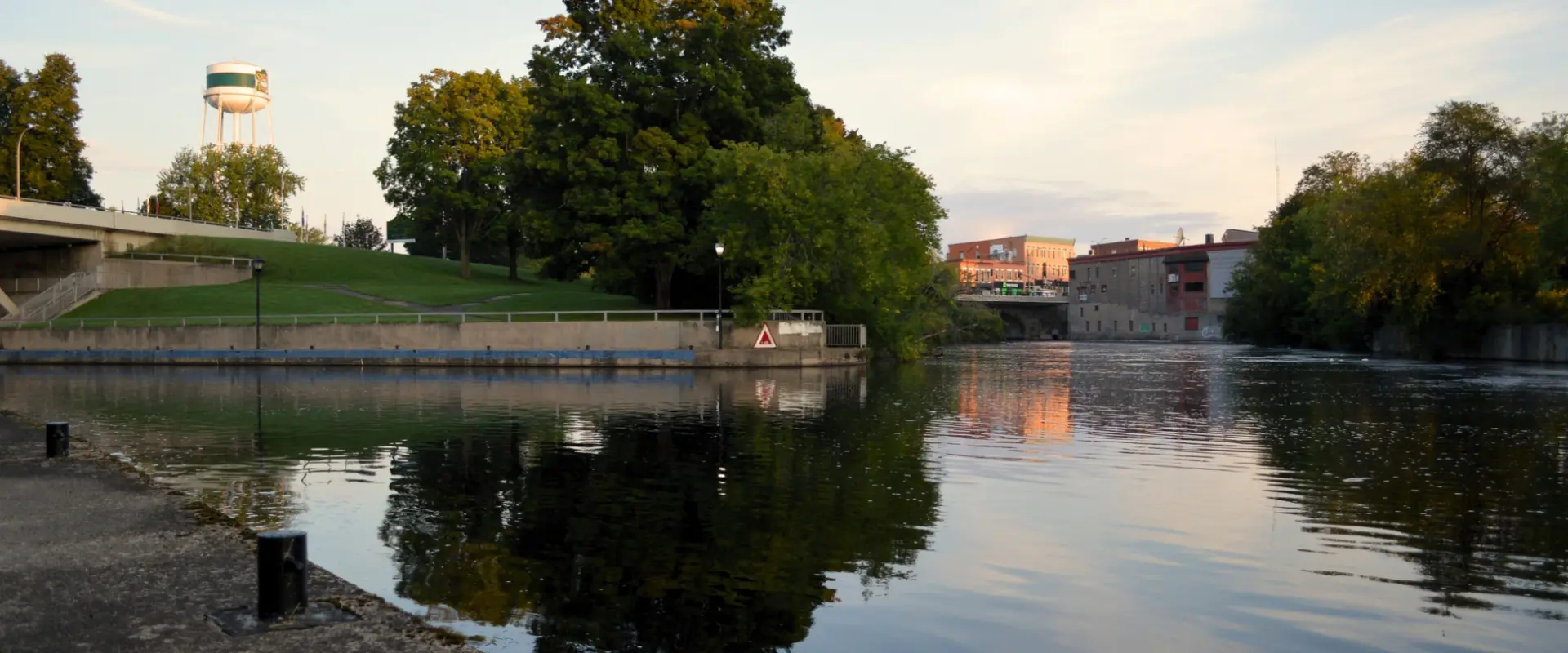
Ontario’s Clean Water Act adds a layer of protection for drinking water before it reaches the treatment plant. Think of a bank’s security system: the Intake Protection Zone is like the bank’s front doors, and the water treatment plant is like its vault. Bank robbers can break through the doors without reaching the vault, but the breach still needs to be taken seriously. Similarly, a threat within an Intake Protection Zone does not prove that contamination reached the intake or people’s taps. It means a potential threat to the water source needs to be assessed and addressed before the water reaches the treatment plant. This source protection complements the treatment plant’s role in making water safe to drink.
The Town’s compost site is a roughly 30-acre property about two kilometres upstream of Smiths Falls’ drinking-water intake on the Rideau River. The actual composting operation takes place on about one acre at the western end. The wetlands lie at the eastern end, toward the intake. Source-protection mapping places the reported C&D dumping area in IPZ-3, with a vulnerability score of 8.
The Mississippi-Rideau Source Protection Plan identifies waste disposal sites as a drinking-water threat activity. Depending on a site’s type, size and other characteristics, waste disposal can be considered a significant threat in IPZ areas with vulnerability scores from 8 to 10. MECP’s explanation for not treating the dumping as a significant threat was that it believed all the waste had been deposited before IPZ protections took effect. Dated satellite imagery shows material continued to be deposited after the Plan took effect on January 1, 2015.
Soil testing found elevated levels of metals and petroleum hydrocarbons, with some results exceeding applicable standards by up to about three times. Groundwater monitoring wells were installed near areas where soil contamination had been found, and groundwater is now tested annually. Because Smiths Falls’ drinking-water system draws from surface water, groundwater monitoring alone does not establish whether contaminants could travel through the eastern wetlands toward the intake.
Those wetlands have not been tested. Old, rusted, partly buried drums or canisters have also been found there, though their contents have not been established.
The Town’s October 2025 hydrogeological assessment is central to the ongoing concerns. It examined the composting operation and related approval questions. Its scope did not include the C&D dumping or the property’s long history as a municipal dumping ground. It did not identify the source of the contaminants or test the eastern wetlands.
The Town also amended its Environmental Compliance Approval, or ECA, to reflect the composting operation’s actual location. That approval concerns the permitted composting site. It does not determine whether contaminants from the separate dumping areas could move toward the wetlands.
The Town presented the hydrogeological assessment publicly as addressing safety concerns across the property, including the waste dumping. This gave residents the impression that the dumping-related concerns had been investigated and resolved, even though they were outside the report’s scope. MECP later relied on the report in saying the Town had fulfilled its commitments and that further delineation was unnecessary.
The evidence establishes soil contamination, but not contamination at the intake. Whether contaminants could travel through the eastern wetlands and surface water toward the intake remains untested.