

Food Programs & Resources
Section Menu
"We can no longer take food security for granted. We know too many members of our community are skipping meals and struggling to eat healthy. We are grateful to the community organizations dedicated to fight food insecurity and are hopeful this information helps link people to the programs that can help." - Mayor Pankow
Easy ways to save money on food
Good Food Box
- The Good Food Box is a program offered and coordinated through the Lions Club.
- Smiths Falls community members can order a large box of fruits and vegetables for $20.00.
- To access the program or for more information, please contact Deb Doe at 613-285-6561
Too Good To Go - App
- Too Good To Go is an app that helps prevent good food from going to waste.
- Consumers can enjoy great value for their money.
Download the app and start saving: About Us - More Information | Too Good To Go
Flash Foods - App
- Flash Foods is an app that grocery stores can partner with to help reduce food waste.
- Flash Foods has helped over 145 million pounds of food to be diverted from landfills.
- Download the app and start saving: Flashfood Impact & Results | Grocery Food Waste Reduction
Food insecurity is the inadequate or insecure access to food due to financial constraints.1
What does this mean for families in Smiths Falls?
- Children going to school hungry and without a nutritious lunch.
- Families worrying about running out of food or being limited to low-cost, high-processed foods.
- Families decrease their food budget to pay other non-negotiable costs of living (for example, paying rent on time or paying for heat during the winter months).
The town of Smiths Falls declared food insecurity an emergency in April 2025.
Why is food insecurity an emergency?
- Over ¼ households in Smiths Falls are food insecure. This means that a quarter of all community members in Smiths Falls are making choices between mandatory costs of living and eating nutritious foods.
- People dealing with food insecurity are more likely to experience:
- poor mental health, including depression, and mood and anxiety disorders;
- increased stress; poor physical health, including increased risk of worse oral health, infectious diseases and injuries;
- chronic diseases such as diabetes, hypertension and heart disease;
- chronic pain, arthritis and back problems;
- shorter life expectancy.2
Advocate for change: food insecurity is a poverty issue. Contact your MP and MPP to advocate for increased minimum wage, and increased social assistance.
Lanark-Frontenac MP: Scott Reid - Contact - Scott Reid MP
Lanark-Frontenac-Kingston MPP: John Jordan - Get In Touch | John Jordan, MPP
Educate yourself: Click this link to learn more about the root causes of poverty and food insecurity. Food banks and other food charity programs cannot end food insecurity.
Support your community: donations to the Food bank, volunteering, and spreading the word with your friends and family can have a lasting impact. No donation is too small.
Be kind and compassionate: You never know what someone else is dealing with. Don’t make judgements about people living in poverty.
To learn more about food insecurity, please see the resources below:
- Addressing Food Insecurity in Leeds, Grenville and Lanark (report): Food Insecurity in Leeds, Grenville & Lanark
- Food Insecurity in Leeds, Grenville and Lanark (infographic): Food_Insecurity_in_Leeds_Grenville_Lanark.pdf
- Feed Ontario 2025 Hunger Report (summary): FEED_HungerReportSummary25.pdf
- Declaration of emergency for food insecurity in Smiths Falls: Smiths Falls declares food insecurity an emergency - Hometown News
Smiths Falls Resources
- Smiths Falls Food Bank: Smiths Falls Community Food Bank – Smiths Falls Community Food Bank
- The Falls Food Hub: Community Food Centre in Smiths Falls | Nourish & Connect at The Falls Food Hub
- Southeast Public Health Unit - Health Equity: About Us - SEPH
- Rideau Community Health Services - Nutrition and Food Cupboard: Nutrition & Food Cupboard Program | Rideau Community Health Services
Community cupboards are small, local food sharing spaces where anyone can take what they need and leave what they can. They are free to use, open to everyone, and help support neighbours experiencing food insecurity in a simple way. These cupboards are community‑led and rely on volunteers, individuals, or organizations to keep them stocked and maintained.
Basic Requirements
- Place the cupboard on private property only (with owner’s permission)
- Keep it set back from the road and in a safe, accessible location
- Cupboards can be indoors or outdoors
- Ensure the space is easy for everyone to access
Before You Start
- Talk to your neighbours, community support helps prevent issues
- Choose a location that works for both access and safety
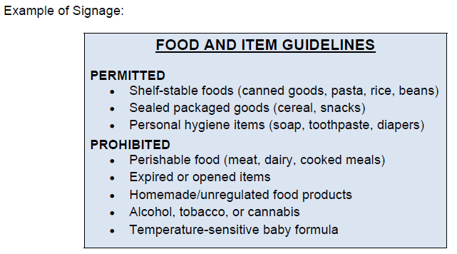
Clear Food Guidelines
Always post clear signage stating what is permitted and hat is prohibited foods.
Keeping It Safe & Clean
- Check the cupboard regularly (ideally daily)
- Remove any expired, spoiled, or unsafe items right away
- Keep the surrounding area clean and free of garbage
- Assign a host or coordinator responsible for upkeep
- Follow local public health guidance for food safety
Design & Accessibility Tips
- Keep the structure small and simple (roughly cabinet‑sized)
- Use durable, weather‑resistant materials
- Include shelves, a door, and optional clear panels
- Add signage and weather protection
- Install at a reachable height (about 3–5 feet)
- Consider a light for visibility at night
Take a look at a few examples below:
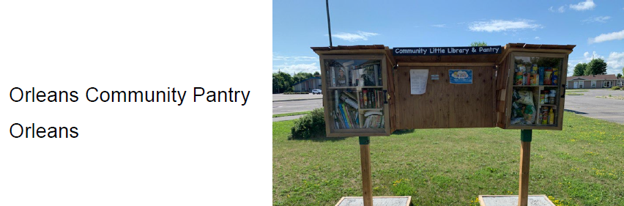
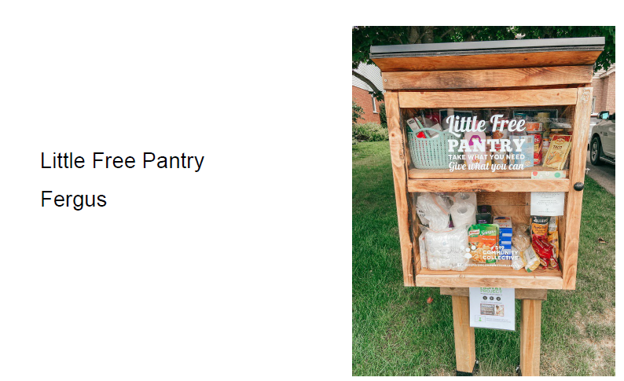
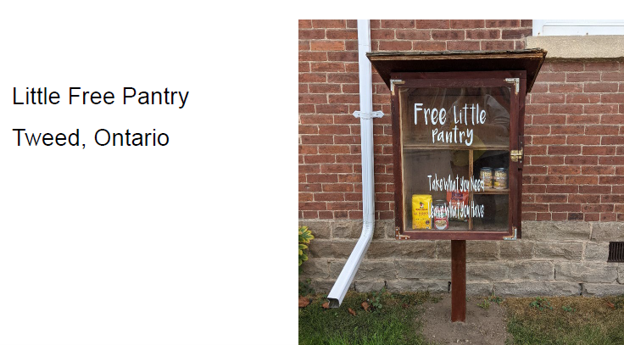
Community cupboards are a simple, compassionate way to make a real difference, helping ensure everyone in our community has access to basic needs.
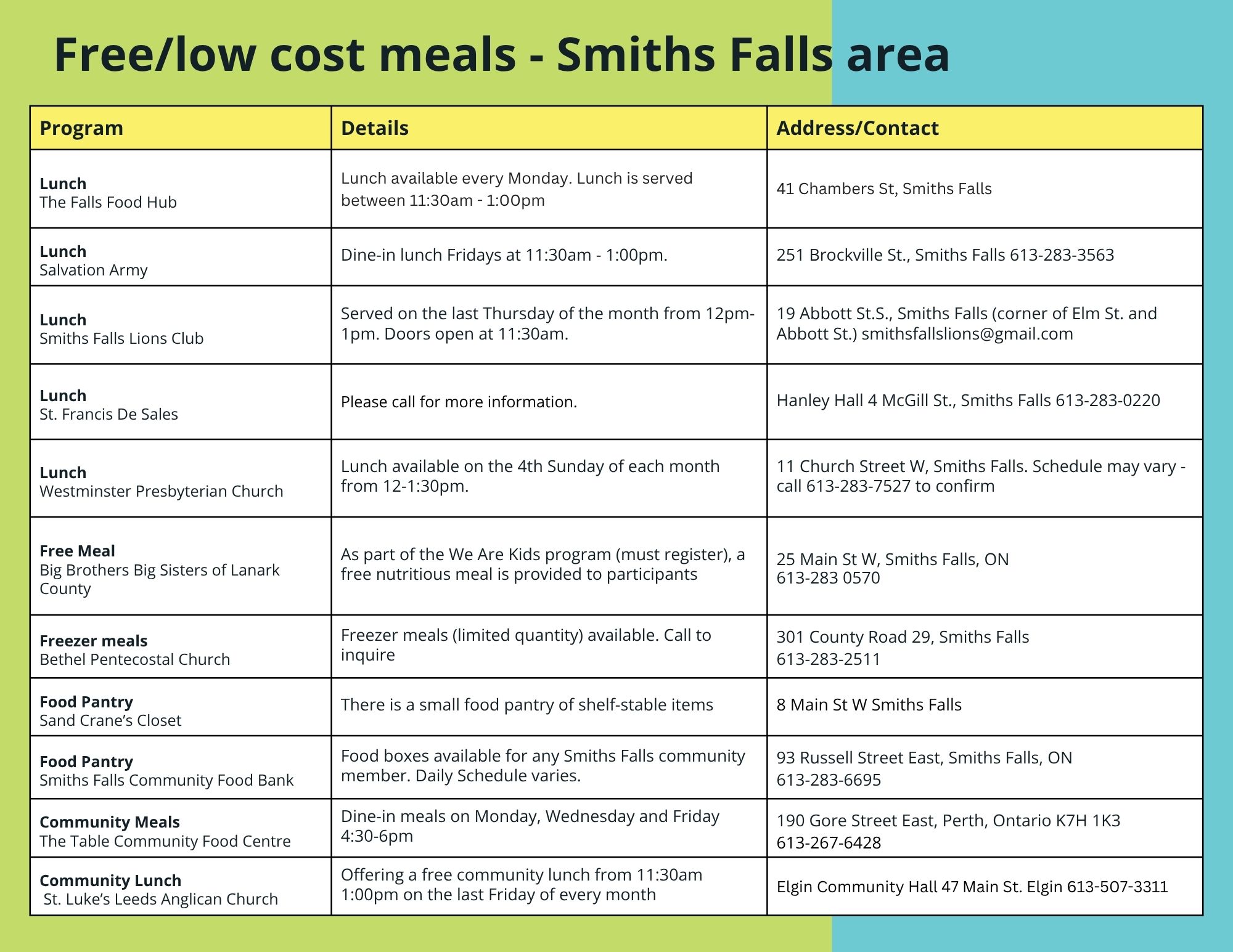
Free/Low Cost Meals - Smiths Falls Area